 InfoBuzzHub – Tech, Money, Lifestyle & Travel Insights
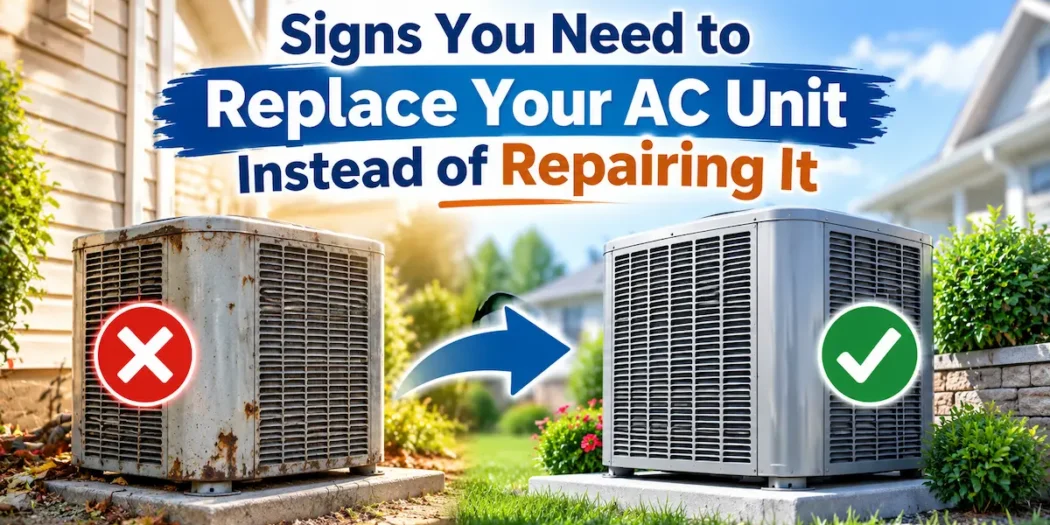
Quick Answer: The clearest signs it’s time to replace rather than repair an air conditioner include a system that’s 10 to 15 years old or more, a repair quote that costs more than about half the price of a new unit, frequent breakdowns within the same cooling season, steadily rising energy bills without a change in usage, uneven cooling throughout the home, and a unit that still uses the now-restricted R-22 refrigerant. A single repair on a younger, otherwise healthy system usually doesn’t warrant replacement, but these signs, especially in combination, generally point toward replacement being the more cost-effective long-term choice.
The 50 Percent Rule: A Simple Starting Framework
A commonly used guideline in the HVAC industry is straightforward: if a repair estimate costs more than roughly 50 percent of what a full replacement would cost, replacement is generally the more economical choice, particularly on a system that’s already aging. This rule exists because a major repair on an old unit often just delays an inevitable replacement while adding the repair cost on top of it, rather than actually extending the system’s useful life by very long.
To use this rule fairly, get both numbers in writing, a specific repair estimate and a specific replacement estimate, before deciding on either. A technician who only quotes one of the two isn’t giving you enough information to make an informed comparison.
Signs Related to Age and Repair History
The System Is 10 to 15 Years Old or Older
Most central air conditioners are built to last somewhere in the range of 10 to 15 years, with some lasting up to 20 years in milder climates with light use. As a system approaches or passes this range, the odds of a major component failure increase, and even routine parts become harder and more expensive to source for older models.
You’ve Needed Multiple Repairs in a Single Season
Occasional maintenance is normal for any system. Needing a technician more than once or twice in the same cooling season is a stronger signal that the unit is reaching the end of its practical lifespan, rather than dealing with an isolated, unrelated issue.
The System Uses R-22 Refrigerant
R-22, sometimes labeled Freon, was phased out of new production in the United States starting in 2020 under EPA regulations. Only recycled or reclaimed R-22 remains available, and it’s priced accordingly, meaning even a relatively minor refrigerant leak repair can cost significantly more than it would on a system using a currently produced refrigerant. If your outdoor unit’s data plate shows R-22, a new leak or refrigerant related repair is one of the strongest signals to seriously consider replacement rather than repair.
Signs Related to Performance
Energy Bills Are Rising Without a Change in Usage
If your cooling habits haven’t changed but your energy bill has climbed steadily, your system is likely losing efficiency, often due to aging components, a refrigerant leak, or a failing compressor forcing the system to work harder to produce the same result. For more on managing energy costs generally, see How to Lower Your Electricity Bill, which covers the broader picture beyond just the AC system itself.
Uneven Cooling or Hot Spots Throughout the Home
If certain rooms consistently stay warmer than others despite no change in your home’s layout or airflow setup, it can indicate the system is struggling to maintain consistent output, particularly common as a unit ages.
The System Runs Constantly Without Reaching the Set Temperature
A properly functioning system should cycle on and off at reasonably regular intervals. A unit that runs continuously without maintaining the thermostat setting is a sign of a meaningful efficiency or capacity problem.
Signs Related to Physical Condition and Safety
Unusual Noises
Grinding, squealing, or banging sounds often point to a failing motor, a loose or worn component, or debris inside the unit. These noises frequently indicate a repair need that, on an older system, may not be worth pursuing relative to a full replacement. Keeping up with routine filter maintenance, as covered in How Often Should You Clean Your Air Conditioner?, can help avoid some of these issues, though it won’t prevent age-related component failure.
Musty or Burning Odors
A musty smell often points to mold growth somewhere in the system, while a burning odor can indicate an overheating motor or an electrical issue, and warrants turning the system off and having it inspected promptly rather than continuing to run it.
Visible Corrosion on the Outdoor Unit
Rust or corrosion on the outdoor condenser or refrigerant lines often signals a slow, ongoing leak or general deterioration that’s been developing for some time, rather than a simple, isolated fix.
When a Repair Still Makes Sense
- The system is under 10 years old and the specific repair is a relatively minor, well understood fix, such as a capacitor or a fuse
- This is the first issue the system has had, rather than part of a pattern of repeated breakdowns
- The repair estimate is well under the 50 percent threshold relative to a full replacement quote
- The unit doesn’t use R-22 and the repair doesn’t involve an expensive, hard to source part
How to Get a Fair Repair vs Replace Comparison
- Get a specific repair estimate in writing, not a vague verbal ballpark
- Get a specific replacement estimate for a comparably sized system, so you’re comparing against a real number rather than a general assumption
- Ask about the system’s refrigerant type if it’s not already documented, since R-22 systems change the math considerably
- Factor in the system’s age and repair history, not just the cost of the immediate issue in isolation
- Get a second opinion for a major repair recommendation, particularly for anything approaching or exceeding the 50 percent threshold
Mistakes People Make With This Decision
- Repairing an aging system repeatedly rather than recognizing a pattern of breakdowns as a signal to consider replacement
- Only getting a repair quote without a comparable replacement quote, making it impossible to apply the 50 percent rule accurately
- Ignoring R-22 refrigerant status, not realizing how significantly it affects the cost and value of a repair
- Waiting until complete failure during peak summer heat to start considering replacement, losing the ability to plan and compare options calmly
- Treating every unusual noise or odor the same way, when a burning smell specifically warrants immediate attention rather than routine scheduling
FAQs
1. How old should an AC unit be before considering replacement instead of repair?
Most central air conditioners last 10 to 15 years, with some lasting up to 20 in milder climates. As a system approaches or passes this range, replacement becomes a more reasonable consideration, especially alongside other warning signs.
2. What is the 50 percent rule for AC replacement?
It’s a common guideline suggesting that if a repair estimate costs more than roughly half the price of a full replacement, replacement is generally the more cost-effective choice, particularly on an aging system.
3. Why does R-22 refrigerant matter for the repair or replace decision?
R-22 was phased out of new production starting in 2020, so only recycled or reclaimed supply remains available, making refrigerant related repairs on R-22 systems considerably more expensive than on systems using a currently produced refrigerant.
4. Are rising energy bills a sign my AC needs to be replaced?
They can be, particularly if your usage habits haven’t changed. A steady increase often points to declining system efficiency from aging components, a refrigerant leak, or a struggling compressor.
5. What noises indicate an AC unit needs to be replaced rather than repaired?
Grinding, squealing, or banging sounds often point to a failing motor or worn component, which on an older system may not be worth repairing relative to the cost of full replacement.
6. Is a burning smell from an AC unit dangerous?
It can indicate an overheating motor or an electrical issue, and it’s generally recommended to turn the system off and have it inspected promptly rather than continuing to run it.
7. Should I always replace an AC unit after one breakdown?
Not necessarily. A single, isolated issue on a younger system with a relatively minor, inexpensive fix usually doesn’t warrant replacement. Multiple breakdowns in the same season are a stronger signal.
8. How can I make sure I’m getting a fair repair vs replace comparison?
Get specific written estimates for both the repair and a comparable replacement, confirm the system’s refrigerant type, and consider a second opinion for any major repair recommendation.


