 InfoBuzzHub – Tech, Money, Lifestyle & Travel Insights
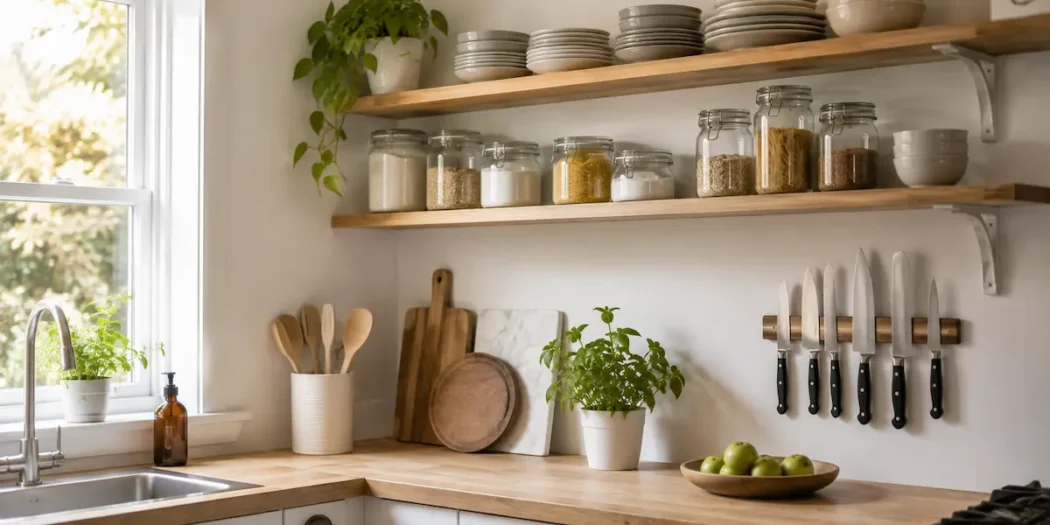
Quick Answer: The most effective way to organize a small kitchen is to declutter first, then maximize vertical space with shelves, hooks, and stacking organizers, use drawer dividers to separate utensils and tools, and store items based on how often you actually use them, keeping daily essentials within easy reach and everything else tucked away. Small, low cost tools like a lazy Susan, over the door racks, and clear labeled containers make a bigger difference than most people expect.
Start With a Real Declutter, Not Just a Rearrange
Before buying a single organizer, take everything out of one cabinet or drawer at a time and sort it into keep, donate, and toss piles. Small kitchens fill up quickly with duplicate tools, mismatched storage container lids, and gadgets that rarely get used. Removing what you don’t actually need often solves more of the space problem than any storage product can.
A simple approach that works well: tackle one zone at a time, such as a single drawer or cabinet, rather than emptying the entire kitchen at once, which can quickly feel overwhelming and get abandoned halfway through.
Organizing by Kitchen Zone
Cabinets
- Use a lazy Susan or turntable for corner cabinets or deep shelves where items get lost toward the back
- Add stackable shelves inside cabinets to use vertical space that would otherwise sit empty above shorter items like mugs or cans
- Store plates and bowls vertically using a plate rack organizer instead of stacking them flat, which makes grabbing one from the middle of the stack much easier
- Group items by category and frequency of use, keeping everyday dishes and cookware in the most accessible cabinets, and occasional use items, like a large roasting pan, higher up or further back
Drawers
- Add drawer dividers to separate utensils, cutting tools, and small gadgets, since a single deep drawer without dividers becomes cluttered almost immediately
- Use a dedicated lid organizer to keep pot and pan lids upright and sorted by size, rather than stacked loosely
- Reserve one shallow drawer for a junk drawer, but add small dividers or a container inside it so it doesn’t become an unusable catch all
Countertops
- Keep only daily use appliances out, such as a coffee maker used every morning, and store occasional use appliances like a slow cooker or waffle iron in a cabinet or pantry
- Use a small tray or organizer to corral items you do want visible, like oils or a knife block, so the counter reads as intentional rather than cluttered
- Mount a magnetic knife strip on an open wall space to free up both counter and drawer space
Pantry or Food Storage
- Transfer dry goods into clear, stackable containers, which use vertical space more efficiently than boxes and bags and make contents easy to see at a glance
- Use a tiered shelf organizer for canned goods so labels remain visible instead of goods being stacked in rows where only the front can is visible
- Store snacks and grab and go items at eye level, and less frequently used items like specialty baking supplies higher up or in bins
Vertical Wall Space
- Install a pegboard or hooks for hanging pots, pans, or frequently used utensils, freeing up cabinet space entirely
- Add a floating shelf above the counter for items you use often but don’t want taking up cabinet space, such as cookbooks or spice jars
- Use an over the door organizer on a pantry or cabinet door for spices, foil, or cleaning supplies
Renter Friendly Solutions (No Drilling or Permanent Changes)
- Tension rod shelves inside cabinets, which create an extra storage layer without any installation
- Command hooks and adhesive strips for hanging lightweight items like measuring cups or oven mitts
- Over the door and over the cabinet organizers that hang in place without hardware
- Freestanding shelving units or a small kitchen cart, which add storage without altering the space itself
- Removable drawer liners and dividers that can be taken with you when you move
Budget Tiers for Small Kitchen Organization
| Budget Level | What to Prioritize | Approximate Cost Range |
|---|---|---|
| No cost | Decluttering, regrouping existing items by frequency of use | $0 |
| Low cost | Drawer dividers, a lazy Susan, clear containers, command hooks | Under $50 total |
| Moderate | Stackable shelving, a pegboard, an over the door organizer system | $50 to $150 |
| Higher investment | Pull out cabinet shelving, custom drawer inserts, professional installation | $150 and up |
A Simple Decluttering Process to Start With
- Pick one zone, such as a single drawer or cabinet, rather than the whole kitchen at once
- Remove everything from that zone and sort into keep, donate, and toss
- Get rid of duplicates and mismatched pieces, especially storage containers with missing lids
- Group what’s left by category, such as all baking tools together or all spices together
- Return items based on frequency of use, placing daily essentials at the most accessible height and occasional items further back or higher up
- Move to the next zone and repeat, rather than trying to finish the entire kitchen in one session
Mistakes People Make When Organizing a Small Kitchen
- Buying storage products before decluttering, which often means organizing items you didn’t actually need to keep
- Ignoring vertical space, leaving empty air above shorter items in cabinets while complaining there’s no room
- Storing rarely used items in the most convenient spots, pushing daily essentials into harder to reach places
- Choosing organizers that don’t fit the actual cabinet or drawer dimensions, leading to wasted space or products that don’t work as intended
- Overcomplicating the system, using too many bins and containers that make it harder to remember where anything actually goes
FAQs
1. What is the best way to organize a small kitchen on a budget?
Start by decluttering for free, then add low cost tools like drawer dividers, a lazy Susan, and clear containers, which make a noticeable difference for under fifty dollars total.
2. How do you organize a small kitchen with no pantry?
Use a section of a cabinet or a freestanding shelving unit as a pantry substitute, transfer dry goods into stackable clear containers, and consider an over the door organizer for smaller pantry items.
3. What should I declutter first in a small kitchen?
Start with duplicate tools, mismatched storage container lids, and appliances or gadgets you rarely use, since these typically take up the most unnecessary space.
4. Are over the door organizers actually useful for small kitchens?
Yes. They add meaningful storage without permanent changes, making them especially useful for renters and for pantry doors, cabinet doors, or even the inside of a broom closet.
5. How can renters organize a small kitchen without drilling holes?
Tension rod shelves, command hooks, adhesive strips, and freestanding organizers all add storage without any permanent installation or damage to walls or cabinets.
6. What is the most space efficient way to store pots and pans?
A pegboard or wall mounted hooks free up the most cabinet space, while a vertical pot organizer inside a cabinet works well if wall mounting isn’t an option.
7. How often should I redo my kitchen organization system?
A quick review every few months helps, especially after a big grocery trip or a change in routine, since habits and needs shift over time even in a well organized kitchen.
8. Do small kitchen organization products actually make a difference?
Yes, particularly drawer dividers, stackable shelves, and clear containers, which use existing vertical and drawer space more efficiently, though decluttering first has the biggest overall impact.

