 InfoBuzzHub – Tech, Money, Lifestyle & Travel Insights
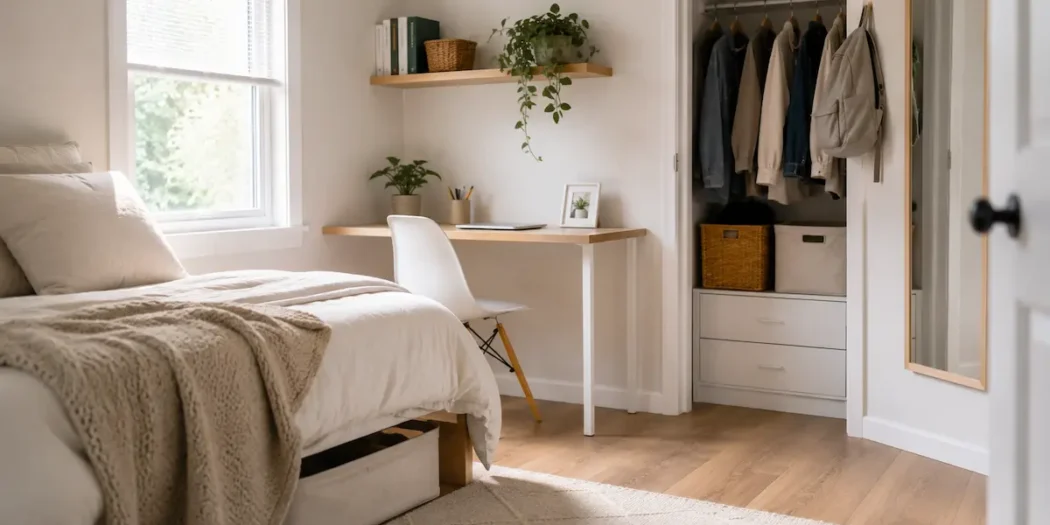
The most effective way to organize a small bedroom is to declutter first, then make full use of vertical space with shelves and wall storage, use the space under the bed for out of season items, choose multi-functional furniture where possible, and keep only what you use regularly within easy reach. Small, low cost additions like under bed storage bins, over the door organizers, and drawer dividers typically make a bigger difference than a full furniture overhaul.
Start With a Real Declutter, Not Just a Rearrange
Before buying any storage products, go through your closet, dresser, and any surfaces one section at a time, sorting items into keep, donate, and toss piles. A small bedroom fills up quickly with clothes that no longer fit, duplicate items, and things kept out of habit rather than actual use. Clearing out what you don’t need often solves more of the space problem than any organizer can.
Tackle one section at a time, such as a single drawer or a shelf in the closet, rather than emptying the entire room at once, which can quickly feel overwhelming and get left half finished.
Organizing by Bedroom Zone
Closet
- Add a closet organizer system with a mix of hanging space, shelves, and drawers to make better use of the full height and width of the closet, rather than relying on a single rod and shelf
- Use slim, matching hangers instead of bulky or mismatched ones, which can meaningfully increase usable hanging space
- Install a second hanging rod below the existing one for shorter items like shirts and folded pants, effectively doubling your hanging storage
- Use over the door storage on the closet door itself for shoes, accessories, or rolled items like scarves and belts
Under the Bed
- Use flat, low profile storage bins designed specifically for under bed storage, ideal for out of season clothing, extra linens, or shoes
- Choose a bed frame with built in storage drawers if you’re in the market for new furniture, which can replace the need for a separate dresser drawer or two
- Use clear bins rather than opaque ones so you can see contents without pulling everything out
Walls and Vertical Space
- Add floating shelves above a desk, dresser, or bed for books, decor, or frequently used items that don’t need to sit on a surface
- Install hooks near the closet or door for bags, jackets, or tomorrow’s outfit, reducing pressure on the closet itself
- Consider a headboard with built in shelving, which adds storage without taking up any additional floor space
- Use wall mounted or over the door jewelry and accessory organizers to free up dresser top space
Dresser and Drawers
- Add drawer dividers to separate folded clothing by category, making it easier to see what you have and reducing the urge to buy duplicates
- Fold clothing vertically rather than stacking flat, a method that makes each item visible at a glance instead of just the top layer
- Use small bins or trays inside drawers for accessories like jewelry, belts, or ties, rather than letting them slide around loose
Nightstand and Small Surfaces
- Choose a nightstand with a drawer or shelf rather than an open surface only, giving you a spot to tuck away small items
- Use a small tray on top to corral loose items like glasses, chargers, or lip balm, keeping the surface visually calm even with a few items on it
Multi-Functional Furniture Worth Considering
- A daybed or storage ottoman that doubles as extra seating and hidden storage
- A desk with built in shelving or drawers, useful if the bedroom also serves as a home office
- A storage bench at the foot of the bed, which adds seating and a place for extra blankets or off season items
Renter Friendly Solutions (No Drilling or Permanent Changes)
- Command hooks and adhesive strips for hanging light items like bags, hats, or jewelry
- Tension rod closet dividers to add an extra hanging layer without installation
- Over the door organizers for the closet or bedroom door itself
- Freestanding shelving units or a small clothing rack, which add storage without any permanent changes to walls
- Removable wall hooks rated for the weight of what you’re hanging, which come off cleanly when you move
Budget Tiers for Small Bedroom Organization
| Budget Level | What to Prioritize | Approximate Cost Range |
|---|---|---|
| No cost | Decluttering, regrouping items by frequency of use | $0 |
| Low cost | Drawer dividers, under bed bins, command hooks, closet dividers | Under $50 total |
| Moderate | Floating shelves, an over the door organizer system, a closet organizer kit | $50 to $150 |
| Higher investment | A storage bed frame, custom closet system, multi-functional furniture | $150 and up |
A Simple Decluttering Process to Start With
- Pick one section, such as a dresser drawer or one shelf in the closet, rather than the whole room at once
- Remove everything from that section and sort into keep, donate, and toss
- Get rid of duplicates and items you haven’t used in the past year, particularly clothing that no longer fits
- Group what’s left by category, such as workout clothes together or off season items together
- Return items based on frequency of use, keeping daily essentials at the most accessible height and occasional items under the bed or on higher shelves
- Move to the next section and repeat, rather than trying to finish the entire room in one session
Organizing a Small Shared Bedroom
- Assign a clear zone to each person, even if it’s just one side of the closet or one set of drawers, to reduce mixing and confusion
- Use labeled bins for each person’s belongings, especially useful in a shared kids’ room
- Consider bunk beds or a loft bed to free up floor space for a shared desk or play area
- Use a room divider or curtain if a small amount of visual separation would help each person feel like they have their own space
Mistakes People Make When Organizing a Small Bedroom
- Buying storage furniture before decluttering, which often means organizing items you didn’t actually need to keep
- Leaving vertical space empty, especially above closet rods or on bare walls, while running out of floor space
- Storing rarely used items in the most convenient spots, pushing daily essentials into harder to reach places like the back of the closet
- Choosing bulky furniture that doesn’t fit the room’s actual proportions, which can make a small bedroom feel more cramped rather than more organized
- Overcomplicating the system with too many separate bins and containers, making it harder to remember where anything actually goes
FAQs
1. What is the best way to organize a small bedroom on a budget?
Start by decluttering for free, then add low cost tools like under bed storage bins, drawer dividers, and command hooks, which make a noticeable difference for under fifty dollars total.
2. How do you organize a small bedroom with no closet?
Use a freestanding wardrobe or clothing rack, add wall mounted hooks for frequently worn items, and rely more heavily on under bed storage and a dresser for folded items.
3. What should I declutter first in a small bedroom?
Start with clothing that no longer fits, duplicate items, and anything you haven’t used in the past year, since these typically take up the most unnecessary space.
4. Are under bed storage bins actually useful for small bedrooms?
Yes. They make use of an otherwise wasted space and work especially well for out of season clothing, extra linens, or shoes that aren’t needed daily.
5. How can renters organize a small bedroom without drilling holes?
Command hooks, tension rod closet dividers, freestanding shelving, and over the door organizers all add storage without any permanent installation or damage to walls.
6. What is the most space efficient way to organize a small closet?
Adding a second hanging rod, using slim matching hangers, and folding clothing vertically instead of stacking flat all make noticeably better use of limited closet space.
7. How do you organize a small shared bedroom?
Assign each person a clear zone, such as one side of the closet or a specific set of drawers, use labeled bins to keep belongings separate, and consider bunk or loft beds to free up shared floor space.
8. How often should I redo my bedroom organization system?
A quick review every few months helps, especially at the change of seasons when clothing needs to be swapped, since habits and needs shift over time even in a well organized bedroom.