 InfoBuzzHub – Tech, Money, Lifestyle & Travel Insights
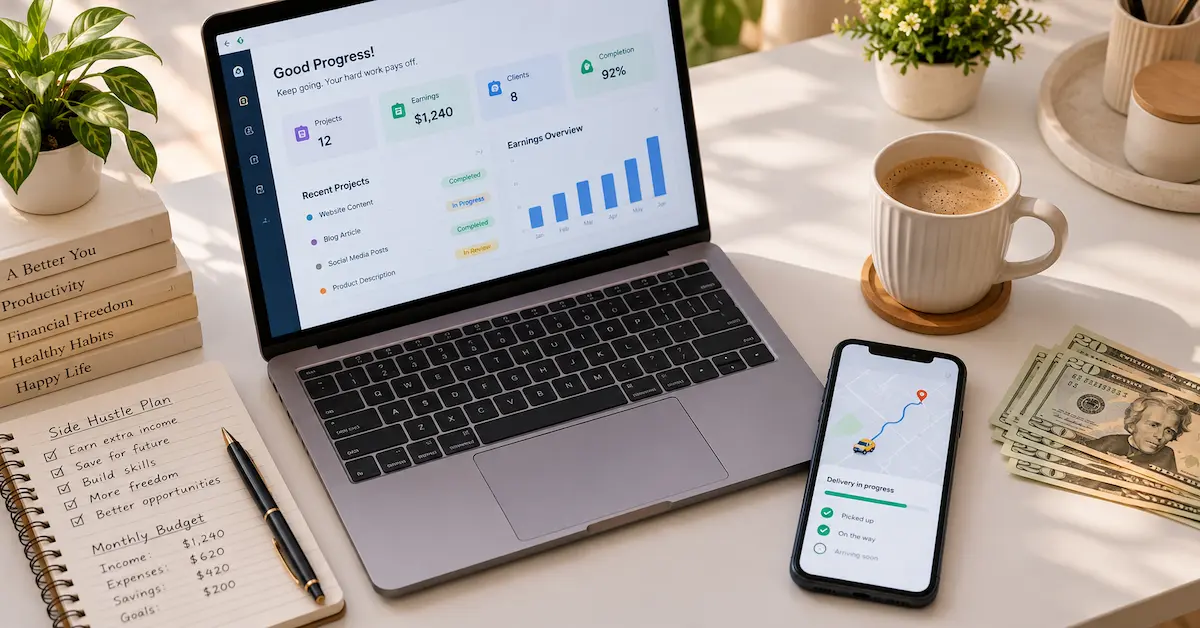
Quick Answer: The best side hustles for beginners in the USA are ones with low startup costs and a short learning curve: gig delivery (DoorDash, Uber, Instacart), freelancing on skills you already have (writing, design, admin work), reselling items you own, and paid user testing. Most beginners can start earning within a week using a smartphone and no upfront investment, though income varies widely based on time, location, and consistency.
Why Side Hustles Are Still Worth Starting
Extra income used to be treated as a short term fix for a tight month. That’s shifted. More people now use side income to pay down debt faster, build savings they can’t touch through a paycheck alone, or test a business idea before leaving a full time job. Roughly a quarter of U.S. adults currently have some form of side hustle, and the gap between casual earners and serious ones is wide, people who treat it as a hobby tend to make a few hundred dollars a month, while those who commit consistent hours to a skill based hustle can earn considerably more.
That gap matters for beginners. It means the side hustle you pick, and how seriously you treat it, matters more than chasing whatever’s trending.
Best Side Hustles for Beginners in the USA
1. Gig Economy and Delivery Work
This is the most beginner friendly category because there’s no application process beyond a background check, no portfolio required, and you get paid quickly.
- Rideshare driving (Uber, Lyft): Requires a qualifying vehicle, a clean driving record, and a state specific minimum age (usually 21).
- Food and grocery delivery (DoorDash, Instacart, Shipt, Uber Eats): Lower barrier than rideshare, some don’t require a car; biking or walking works in dense cities.
- Package and courier apps (Amazon Flex, Roadie): Good for people who prefer set blocks of time over open ended shifts.
Why it works for beginners: You control your hours, there’s no interview, and most apps pay out within a day or two.
Trade off: Earnings depend heavily on gas prices, vehicle wear, and local demand. Track your actual profit, not just what the app shows before expenses.
2. Freelancing and Skilled Services
If you already have a skill from your day job, writing, bookkeeping, graphic design, customer support, data entry, social media management, freelancing turns that skill into direct income without needing a new certification.
- Platforms to start on: Upwork, Fiverr, Contra
- Realistic starting point: Small, low commitment projects while you build reviews and a portfolio
- Higher paying niches for beginners: Virtual bookkeeping, resume writing, basic video editing, and social media scheduling tend to have steady demand and don’t require years of experience to start
Why it works for beginners: You’re monetizing something you already know instead of learning from zero.
Trade off: The first few weeks are usually the slowest, you’re building trust and a track record before rates improve.
3. Selling Products Online
Selling doesn’t require inventing a product. Most beginners start by reselling.
- Reselling personal items or thrifted finds: Facebook Marketplace, Poshmark, Mercari, eBay
- Print on demand and digital products: Custom apparel, printable planners, and templates through platforms like Etsy or Shopify, without holding physical inventory
- Handmade goods: Etsy remains the most beginner accessible marketplace for crafts, art, and niche products
Why it works for beginners: Reselling has almost no upfront cost if you start with items you already own.
Trade off: Digital products and print on demand stores usually take a few months of consistent listing and marketing before they generate steady income, this isn’t a same week payout like gig work.
4. AI Assisted Side Hustles
This is one of the fastest growing categories for 2026, but it’s often misunderstood. AI tools don’t replace a skill, they speed up delivery of one you already have.
- AI assisted freelance writing or editing: Using AI to draft faster while you handle research, fact checking, and quality control
- Prompt based digital products: Selling templates, guides, or workflows built around specific AI tools
- AI supported design or content creation: Faster turnaround on client work using AI as a production tool, not a replacement for judgment
Why it works for beginners: It lowers the time cost of skill based freelancing, especially for people without formal training.
Trade off: Clients still pay for quality and reliability, not for “AIgenerated” work treat these tools as a productivity boost, not the product itself.
5. Renting Out What You Already Own
If you own a car, a spare room, or equipment that sits unused most of the week, renting it out is close to passive income.
- Car sharing: Turo
- Spare room or property: Airbnb (check local short term rental regulations first, these vary significantly by city)
- Equipment and tools: Peer to peer rental apps for cameras, tools, and outdoor gear
Why it works for beginners: Minimal ongoing time investment once it’s set up.
Trade off: Requires an asset you already own, plus insurance and liability research before listing.
6. User Testing, Surveys, and Micro Tasks
Not a full income replacement, but a legitimate way to earn modest, consistent extra cash with zero skill requirement.
- Paid usability testing: UserTesting, Trymata, testing websites and apps for a flat fee per session
- Focus groups and market research: Often pay more per hour than typical survey sites
- Pet and house sitting: Rover and Wag for people comfortable with animals
Why it works for beginners: No experience, no equipment, and sessions are usually short.
Trade off: Volume is limited, this works best as a supplement to another hustle, not a primary one.
Side Hustle Comparison Table
| Side Hustle Type | Startup Cost | Time to First Payout | Beginner Difficulty | Best For |
| Delivery / rideshare apps | Low–Medium (vehicle/gas) | 1–3 days | Easy | Immediate cash flow |
| Freelancing (skills based) | Very Low | 2–6 weeks | Medium | People with a marketable skill |
| Reselling items | Very Low | Days | Easy | Decluttering + quick cash |
| Digital products / Etsy | Low | 1-3 months | Medium | Patient, creative beginners |
| Renting assets (car, room) | Medium (insurance, setup) | Days–weeks | Medium | People with an unused asset |
| User testing / micro tasks | None | Days | Very Easy | Supplemental income only |
How to Choose the Right Side Hustle for You
Before picking one, answer three questions honestly:
- How much time can you realistically give it each week? Five focused hours on freelancing usually outperforms fifteen scattered hours on gig apps.
- Do you need cash this week, or can you wait a month for it to grow? Delivery and reselling pay fast. Freelancing, Etsy shops, and rentals build slower but often pay better over time.
- What skill or asset do you already have? The fastest path to decent income is monetizing something you don’t have to learn from scratch.
There’s no single “best” side hustle — there’s a best fit for your schedule, skills, and how quickly you need the money.
How to Start Your First Side Hustle
- Pick one option, not five. Beginners who spread thin across multiple platforms usually make less than someone focused on one.
- Set up separate finances early. A simple separate bank account or even a labeled savings sub account keeps side income easy to track for taxes later.
- Start small and track real profit. For gig work, log mileage and expenses from day one, the app’s payout number isn’t your actual profit.
- Ask for your first reviews. For freelancing or Etsy, your first few reviews matter more than your first few dollars — they unlock better clients and search visibility.
- Reassess after 30 days. Look at actual hourly earnings, not total dollars. This is the number that tells you whether to scale up, switch platforms, or add a second income stream.
Taxes: What Beginners Need to Know
This is the part most beginner guides skip, and it causes the most confusion later.
- You owe tax on side income regardless of whether you get a form for it. Not receiving a 1099 doesn’t mean the income isn’t taxable, you’re still required to report it.
- 1099 K reporting threshold: For the 2025 tax year and beyond, the reporting threshold for third party payment platforms (PayPal, Venmo, Cash App, Etsy, etc.) reverted to $20,000 in payments and more than 200 transactions in a year, following a rollback of the earlier lower threshold. That means fewer casual sellers and gig workers automatically receive a 1099 K, but the income is still taxable even without one.
- 1099 NEC threshold: Starting in 2026, the reporting threshold for non employee compensation (common for freelancers and contractors) increases to $2,000, up from the long standing $600 threshold, with future inflation adjustments.
- Self employment tax applies separately from income tax. If your side hustle is run as an individual rather than through an employer, you’re generally responsible for both income tax and self employment tax on your net earnings.
- Estimated quarterly payments may be required. If you expect to owe a meaningful amount from side income, the IRS generally expects estimated payments throughout the year rather than one lump sum at filing time.
This isn’t tax advice, rules change, and your situation may differ. For anything beyond the basics, a licensed tax professional or the IRS’s own guidance is the right next step.
Common Mistakes Beginners Make
- Chasing the “hottest” side hustle instead of the best fit. Trending doesn’t mean beginner friendly or sustainable.
- Ignoring real costs. Gas, app fees, packaging, and platform commissions eat into income fast if they’re not tracked.
- Quitting too early. Freelancing and Etsy shops often look unprofitable in week one and profitable by month three — the slow start is normal, not a sign of failure.
- Mixing personal and business money. This makes taxes harder and makes it nearly impossible to know your real profit margin.
- Spreading across too many platforms at once. Depth on one platform usually beats a shallow presence on five.
FAQs
1. What is the easiest side hustle to start with no experience?
Delivery and rideshare apps (DoorDash, Uber, Instacart) are the easiest to start because they don’t require a portfolio, interview, or specific skill — just a background check and, for most, a vehicle.
2. Can I start a side hustle with no money?
Yes. Reselling items you already own, freelancing with skills you already have, and user testing apps all require little to no upfront investment.
3. How much can beginners realistically earn from a side hustle?
It varies widely. Casual, low time commitment side hustles often bring in a modest amount per month, while consistent, skill based side hustles like freelancing can earn significantly more over time. Treat early income estimates as a range, not a guarantee.
4. Do I have to pay taxes on side hustle income?
Yes. Side hustle income is taxable whether or not you receive a 1099 form. Keeping separate records from the start makes filing much easier.
5. What’s the difference between a side hustle and a small business?
A side hustle is typically informal, part time, and low commitment. It becomes a small business when you register it formally, scale beyond occasional income, and start treating it as your primary income source or a long term venture.
6. How many hours a week do I need for a side hustle to be worth it?
There’s no fixed number, but most beginners see meaningful results with 5–10 focused hours per week. Consistency matters more than total hours.
7. Which side hustle pays the fastest? Delivery and rideshare apps typically pay out within a day or two. Reselling items can also generate cash within days of listing.
8. Is freelancing a good side hustle for complete beginners?
Yes, if you already have a marketable skill (writing, design, admin support, bookkeeping). It takes longer to build momentum than gig work, but earning potential per hour is usually higher once established.
Quick Questions People Also Ask
What are the best side hustles for beginners in the USA?
Gig delivery apps, freelancing on existing skills, reselling personal items, and paid user testing are the most beginneraccessible options due to low startup costs and quick entry.
How fast can a beginner start earning from a side hustle?
Gig and delivery apps can generate income within days; freelancing and Etsy shops typically take a few weeks to a few months to build momentum.
Do beginners need money to start a side hustle?
No, reselling owned items, freelancing existing skills, and user testing all require little to no startup capital.
Is side hustle income taxable in the USA?
Yes, all side hustle income is taxable regardless of whether a 1099 form is issued.
What is the 1099-K threshold for side hustle income in 2026?
The threshold reverted to $20,000 in payments and more than 200 transactions per year for the 2025 tax year and beyond, though income below that threshold is still taxable.
What’s the best side hustle for someone with a full time job?
Flexible, schedule-friendly options like delivery apps, freelancing during evenings/weekends, or reselling tend to fit best around full time work.
Can AI tools help with a side hustle?
Yes, AI tools can speed up freelance writing, design, and content production, but clients still pay for quality and reliability, not the tool itself.


2 comments
Pingback: Best Side Hustles You Can Do From Home (2026 Guide)
Pingback: How to Become a Virtual Assistant With No Experience